Weekly or fortnightly? Choose a 1:1 cadence you can explain
Weekly is not a rule. Agree a 1:1 interval with a reason, a way to get help in between and the signals that mean it is time to change it.
If your weekly 1:1 has become a habit nobody chose, don't just keep it or quietly stretch it. Agree the interval with your report, say why it fits right now, agree how they get help before the next meeting, and name what would make you change it.
Weekly is common advice, not a rule
Most guidance already allows some flexibility. Lighthouse recommends weekly for teams of up to five, and every other week “in case you're leading larger teams, or know your people extremely well.”
The research points the same way. In a 2022 study of 303 employees supervised by meeting researcher Steven Rogelberg, people with 1:1s weekly or more, and people with 1:1s every two weeks to monthly, were both more engaged than people with none. The two groups did not differ significantly. What managers did in the meeting mattered more than how often it happened. The author's advice: tailor frequency to the individual, but meet at least monthly. It is survey data, so it shows an association, not a formula.
So the useful question isn't “weekly or fortnightly?” It's “why this interval, for this person, now?”
Four reasons that justify an interval
- Support need. Someone new to the role, to the team or to you, or someone stuck on a stretch assignment, usually needs a shorter gap.
- How fast the work changes. If priorities shift every week, a fortnightly 1:1 discusses old news. Stable, well-understood work can take a longer gap.
- The pair's experience. Do problems reach you without the meeting? If yes, a longer interval may hold. If you keep learning things late, it won't.
- Your real capacity. With a large team, a fortnightly slot you keep beats a weekly one you cancel. Seniority is not a reason to disappear, though. Senior people still need a regular place for career, feedback and the problems they won't raise in a team channel.
Write it down in three lines
An invented example:
Every two weeks, 30 minutes: the project is stable and we talk daily at stand-up.
In between: message me “need 15 minutes” and I'll find time within two working days. Urgent problems don't wait for either.
We review this after our next two 1:1s, or sooner if the scope changes.
The second line matters most. A longer interval is only fair if help between meetings is easy to get and easy to ask for.
Signals to revisit it
Go shorter when:
- sessions keep running over, or topics roll forward twice
- actions from last time are stale by the time you meet
- the “need 15 minutes” route gets used every week
Go longer, or change the agenda first, when you both arrive with nothing new. Lighthouse notes that repetitive meetings can call for a different frequency, or for better use of the time.
And if the real gap between conversations drifts past a month, you are below the study's at-least-monthly line. Fix that first.
Where 1on1 fits
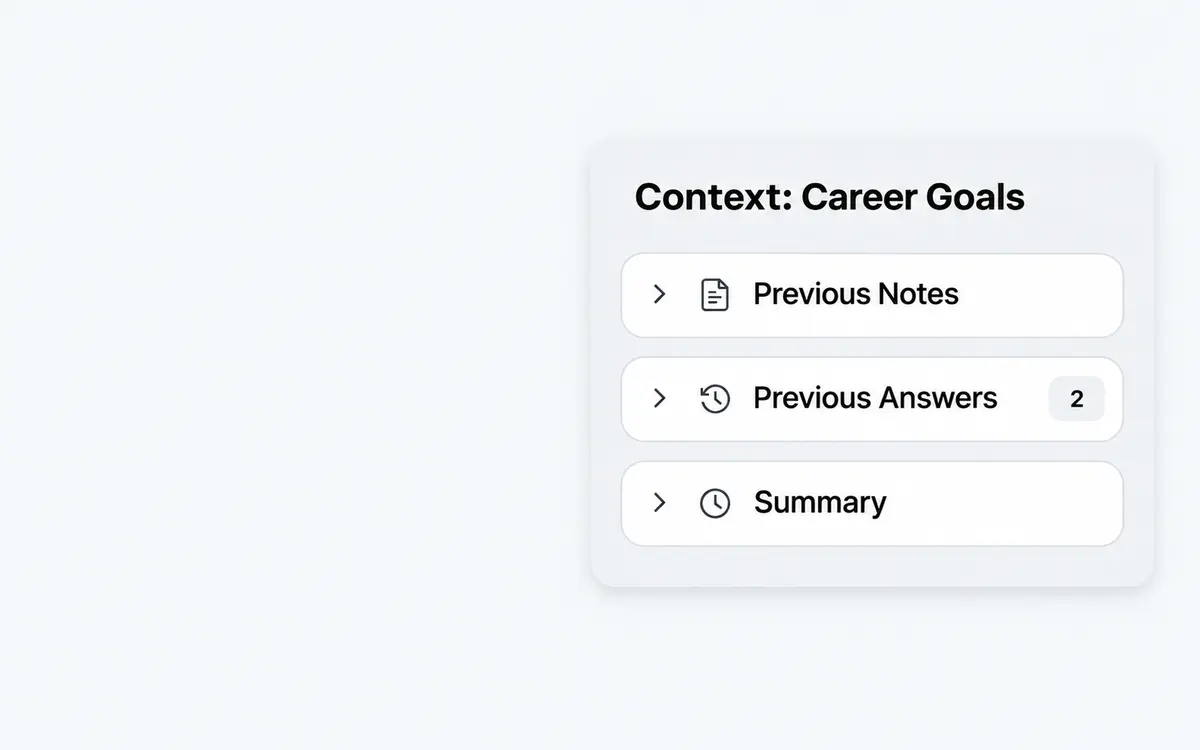
The study also notes that longer gaps make it harder to connect previous action items to the new agenda. 1on1 carries action items and written context into the next conversation, so preparation begins with the relationship's existing record.
At your review point, read the last two records together. Did the actions close? Did topics repeat? Did anything wait too long? That's your evidence for keeping or changing the interval. The decision stays with the two of you.
See how 1on1 carries the written record from one 1:1 to the next.
Next step
Test it with one manager and one direct report
Start free and keep this article context through the registration step.
Start free