Explain the first 1:1 before you send the invitation
Give your report a clear first 1:1 invitation: its purpose, what to prepare and how it differs from a formal review.
Before you send someone their first recurring 1:1 invitation, explain three things: why you are meeting, what they can bring and how this conversation relates to your company’s formal review process. A calendar title gives them a time. Your message should give them a way to participate.
For a manager introducing 1:1s to a direct report, the useful starting point is the invitation itself. Choose what the meeting is for before choosing questions. Then make that purpose visible to the person receiving it.
Give the invitation a clear job
Describe the recurring conversation in terms your report can use: a place to discuss work that needs your help, raise questions and revisit things you agreed to do. Tell them whether you expect any preparation. If bringing one topic is enough, say so; avoid quietly expecting a presentation or a written account of the week.
Be precise about reviews. If this meeting is separate from a formal performance review, explain where that review happens. If a review is actually on the agenda, name it and provide the relevant preparation. An invitation should reflect the meeting you intend to hold.
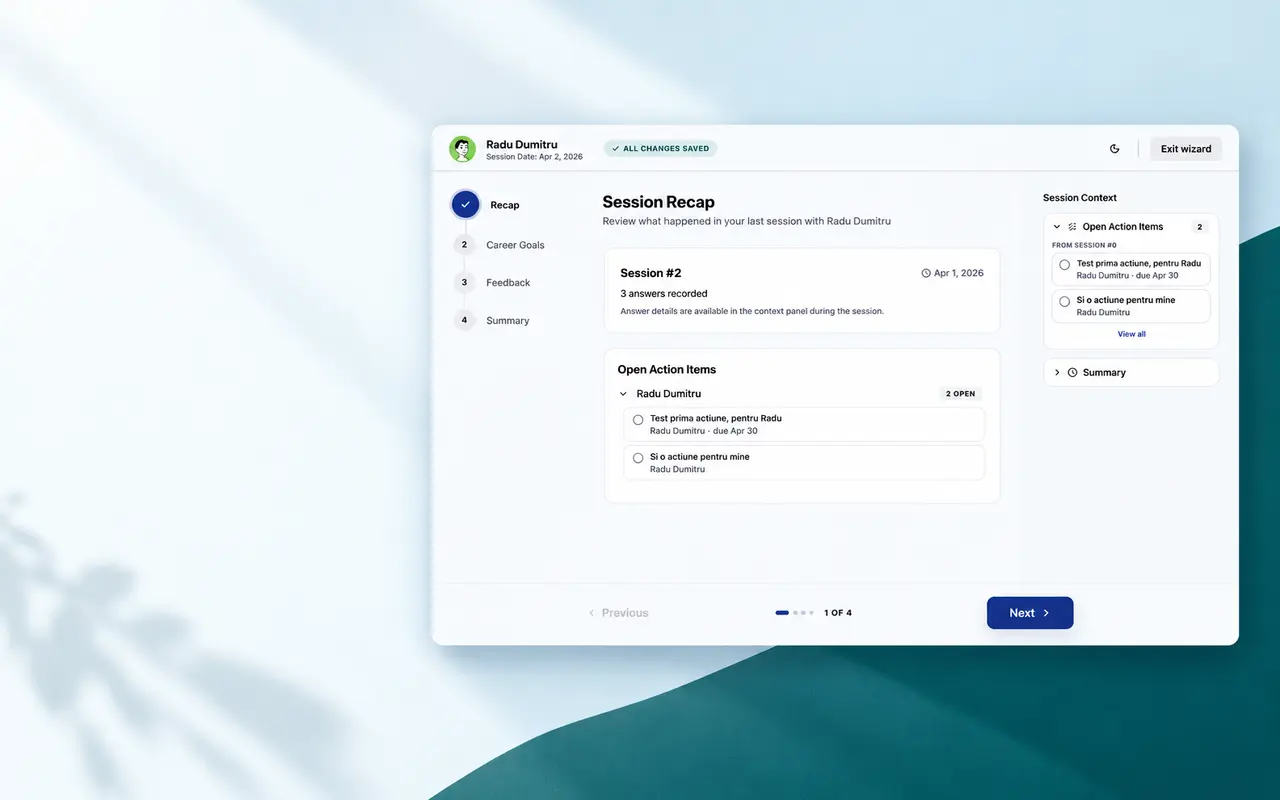
This distinction matters when choosing a tool, too. 1on1 provides guided agendas, written session context, action items and recurring follow-up. Use that workflow to support the conversation; keep your company’s formal review requirements in their established process.
A message to adapt
Illustrative invitation — adapt the review sentence to your company’s actual process:
I’d like us to start a recurring 1:1 so we have time for questions, work you need my help with and follow-up on what we agree. For our first conversation, bring one topic you want space for; no slides or written report needed. This is separate from our formal review, which follows the company’s review process. We’ll also agree how to use future sessions. What would you like to know before we meet?
Send the explanation with the invitation, where the recipient can find it again. Replace vague wording about the review process with the actual location or guidance available in your company. Only promise preparation is optional if you will run the meeting that way.
Carry the explanation into the first session
Start by checking whether the purpose made sense. Give your report room to ask about the process before moving into your questions. Then use their topic to help shape the conversation.
Before closing, agree:
- What each person wants these recurring conversations to make room for.
- What preparation is useful for the next meeting.
- Which actions, if any, you will return to together.
In 1on1, the written session context and tracked actions support preparation for the next conversation. That is the product’s useful role here: carrying the discussion forward after the invitation has made its purpose clear.
Before your next first-time invitation, read it from the recipient’s side. Can they tell why you are meeting and what to bring? If you want to see how the ongoing agenda and follow-up work, request a 1on1 demo. Bring the workflow question you want to check, without sharing sensitive employee notes.
Sources and references
Next step
Test it with one manager and one direct report
Start free and keep this article context through the registration step.
Start free